

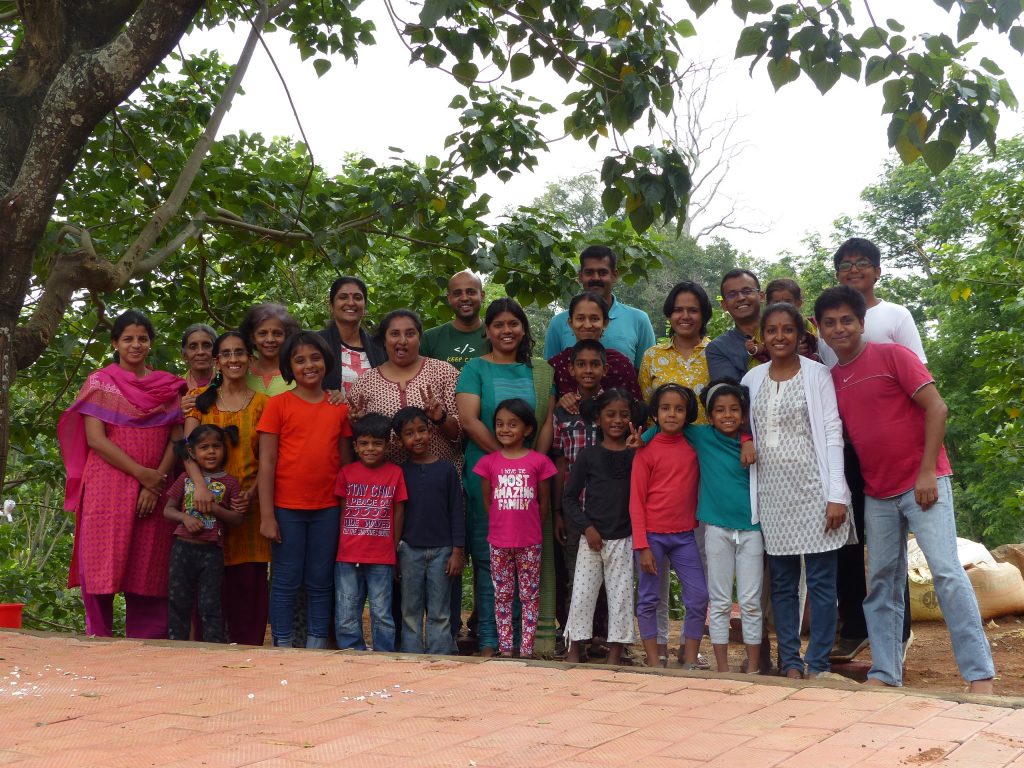
It takes a global village to raise a child.
As parents, we are charged with the great responsibility of caring for our children’s physical, emotional, social, and intellectual development. And while we may be willing and have all the best intentions in the world, we are not without our concerns and fears, given a world that has changed drastically since we ourselves were children.
Family structures have morphed greatly, crossing geographical, linguistic, cultural, and even gendered boundaries. There has been a loosening of old moral strictures (such as the old maxim Children should be seen and not heard), but an equal losing of traditional wisdom.
Is it any wonder that in carrying out this incredible act of love on a daily basis, in addition to leading hectic work lives, as well as dealing with media that preys on the mental health of our children, parents today are stretched too thin? Parenting is a selfless act, but can we truly provide without having any sense of where our limits lie? As any parent who has run a full work day and come home to meet the needs of their children can attest to, sometimes we have run ourselves to the bone and provide nothing but tension, anxiety, and sharp words to those we love the most.
Ritambhara initiated a workshop called Parenting Inside Out, from May 18th – 21st, 2017, as a step towards creating a space for contemplative engagement about the challenges and possibilities of parenting in today’s world.
Over the four days, we slowed down the frenetic pace of our lives, paused, and inquired into questions that many parents ask, such as:
- What am I doing as a parent? What are my fears within the current context of our world today?
- What are my strengths and challenges as a parent?
- In what ways can I listen, help, and support my child better?
- What is the relationship between my well-being and parenting?
The Parenting Inside Out workshop brought together two important areas for exploration – Yoga and Parenting. The workshop was facilitated by Anita Balasubramaniam, Radhika Rammohan, and Sashikala Ananth.
The initial days were spent articulating the questions and concerns that participants had and examining the need to reevaluate and align one’s self. Almost immediately we could remark on how powerful a tool sharing is. The importance of listening to one another cannot be understated, and the magic of being heard brought forth its own miracles for everyone involved.
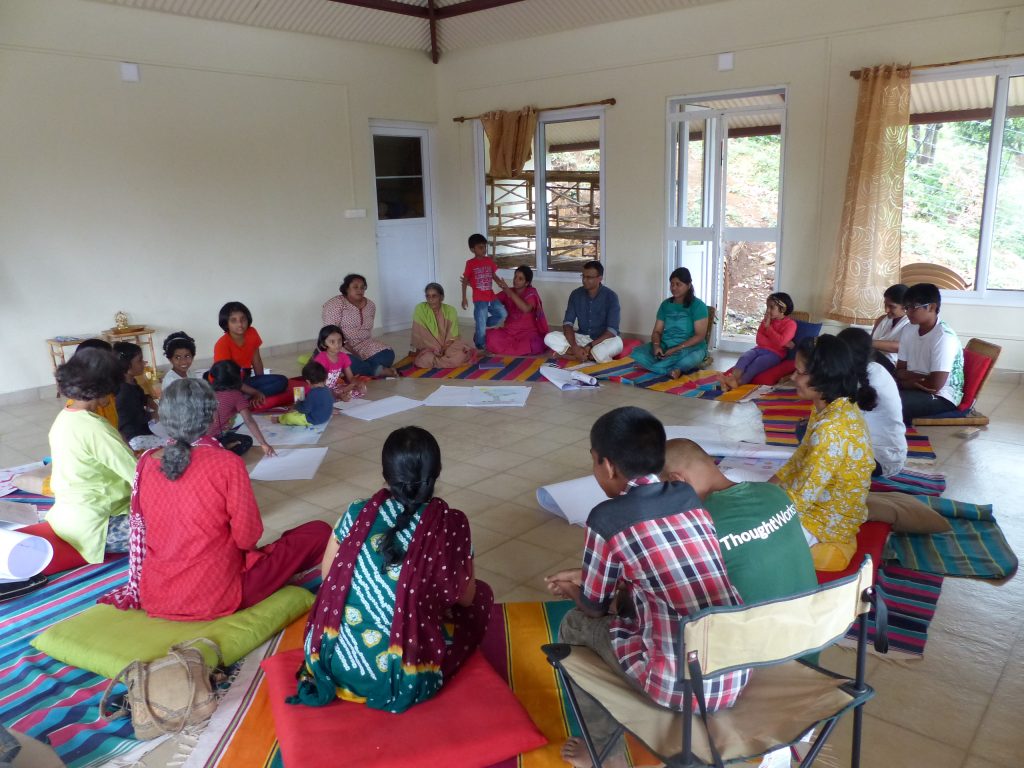
The next days took an interesting turn as we examined how our perceptions are coloured by our conditioning. Each of us sees an experience as something other than what it is, due to the way we have been shaped by our own early experiences. In such times, holding our inner ground and staying present to the moment allows us to discard or deflect from old trigger patterns and explore new ways of responding to the situation.
Our final days were spent examining the various voices and personas that colour our daily actions and responses. Sometimes, simply allowing ourselves to be vulnerable and access different emotions gives us respite from old patterns and unlocks healing and learning.
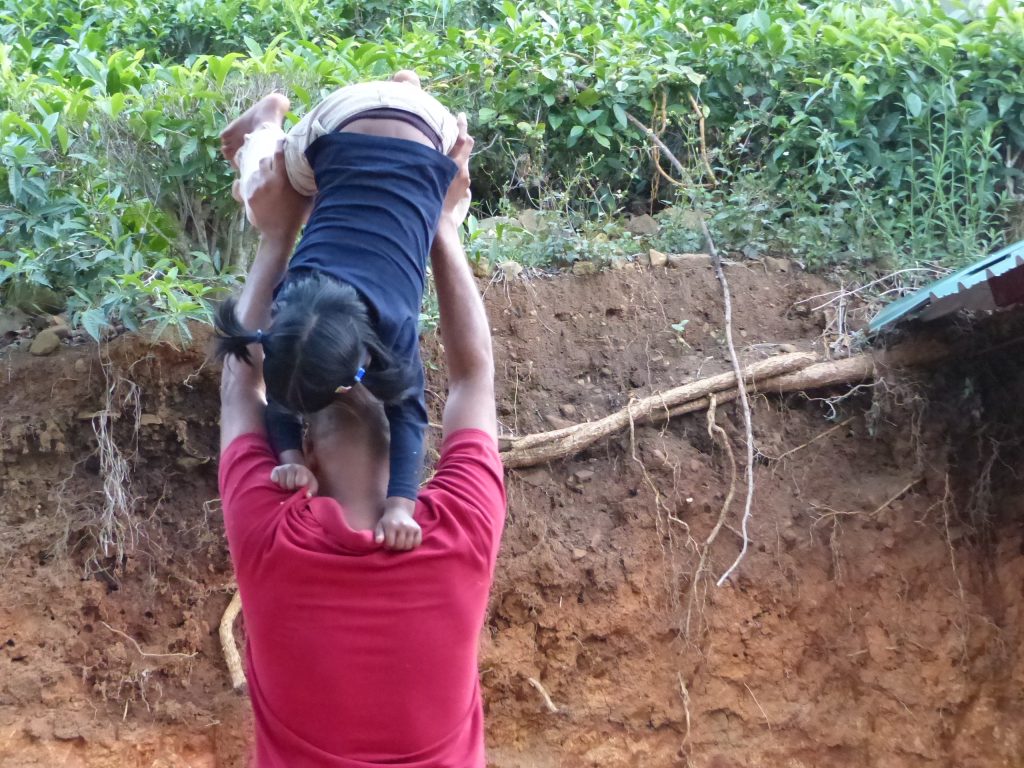
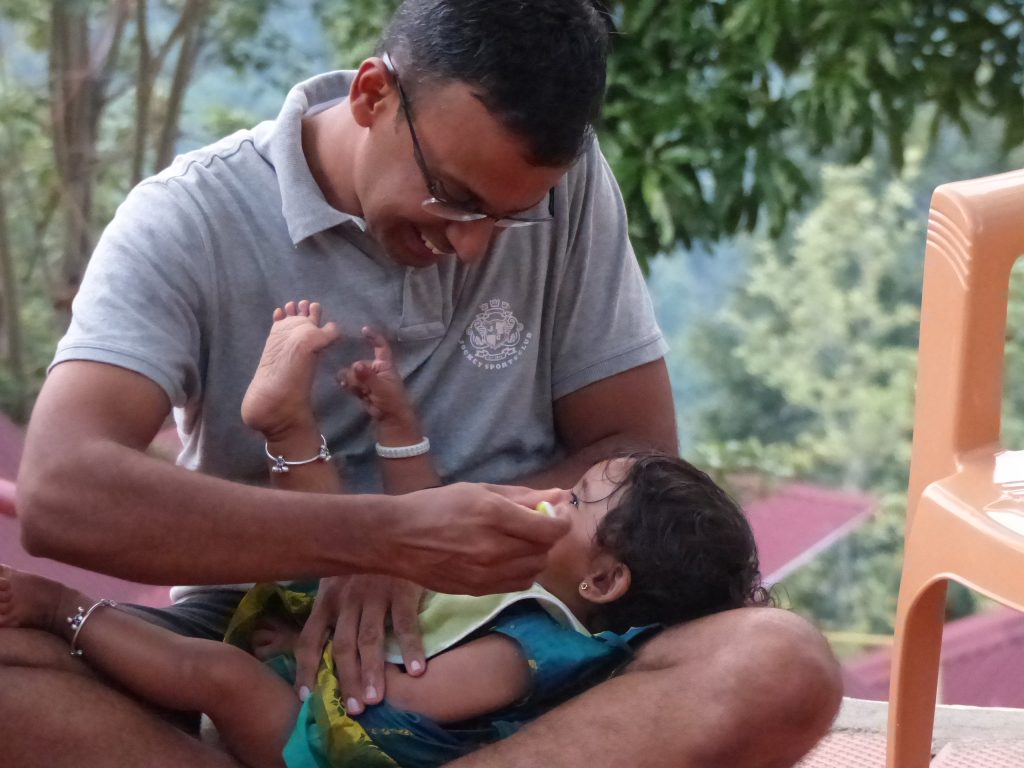
Having their children in the space was a wonderful experience for the participants, as they brought much laughter and joy into the process. It was a chance for parents to engage with their children in different scenarios, and learn from their open hearts. Each day at the retreat was organized in such a way that parents had some time to do reflective work and children and parents had some time together singing, playing games, taking walks, and just being with each other in the presence of mother nature. In this, they were guided and supervised by Dayalakshmi, our co-facilitator, whose presence was invaluable in caring for and supporting the children.
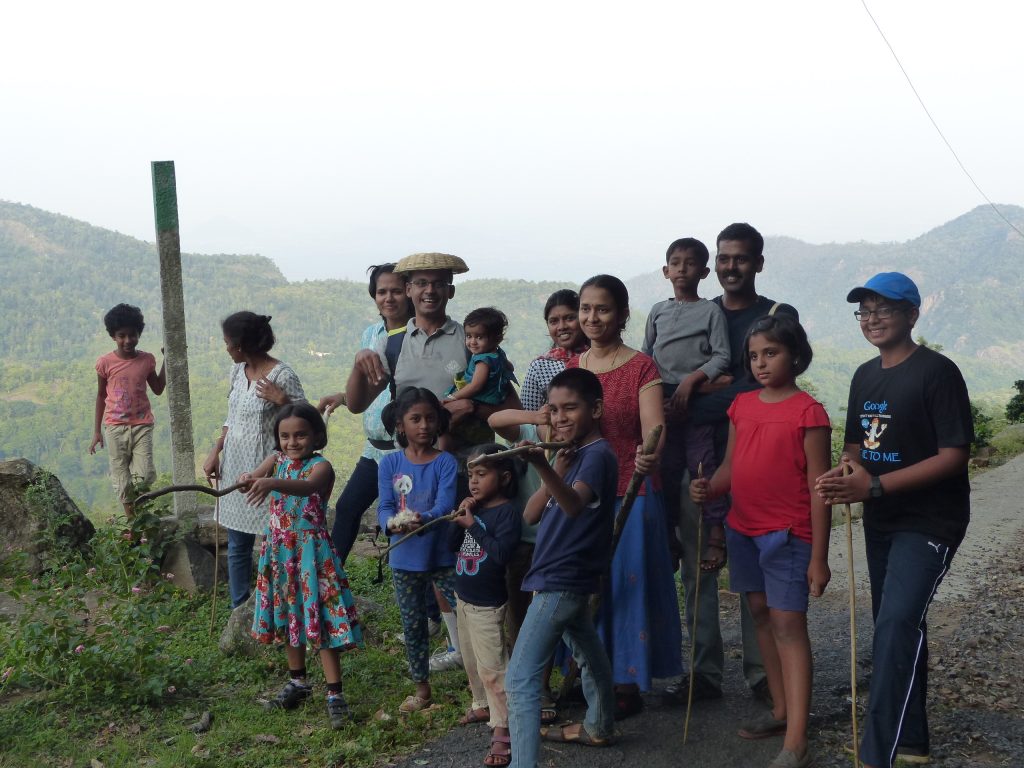
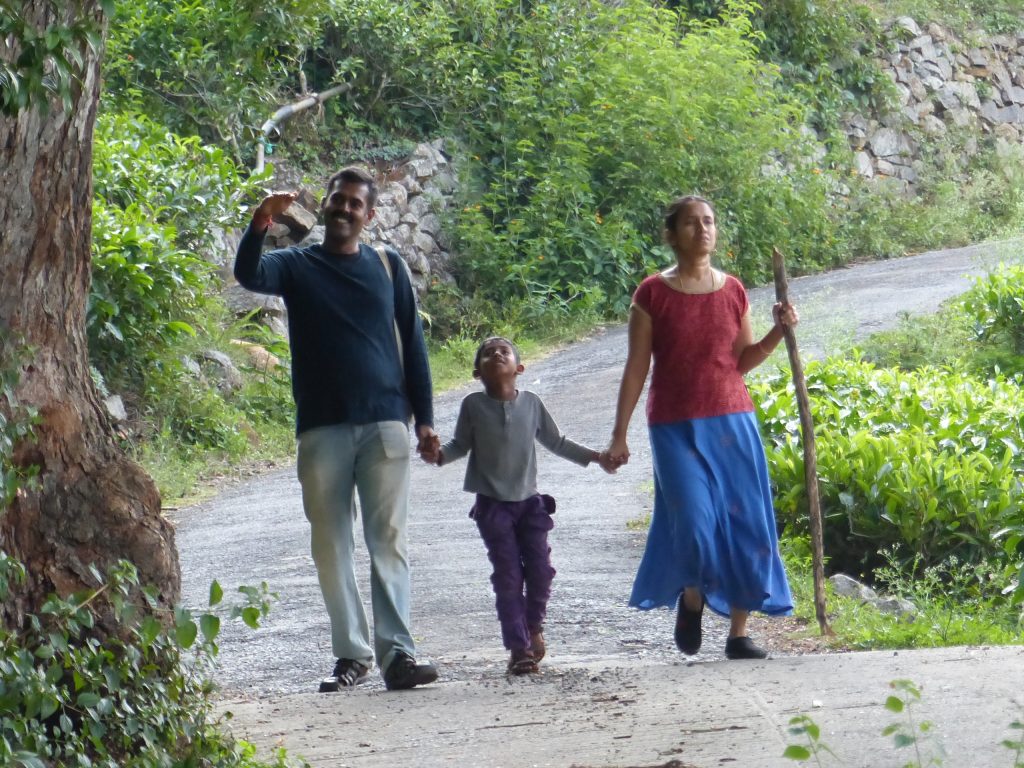
Radhikha reflected on the experience : “The specialness of the retreat that just was, is difficult to recapture and replicate. The silence of ritambhara ashram, the forests and hills witnessing this group of adults and children growing and playing together, the warm and deeply thought out holding of space that Anita did, the spontaneous, compassionate insights from Sashi… I thought it allowed us to touch deep parts of ourselves. And that we will continue to explore in greater depth for ourselves.” Anita’s experiences were beautifully crystallised in her post.
Strengthened and grounded through Asana, pranayama and chanting practice, silent walks, mindful eating, reflective and experiential activities, and inspired by brief introductions to relevant ideas from yoga philosophy, the group emerged with a sense of deep hope for the future, and greater love and compassion for themselves and others.
 Anoop is a student of Yoga, an entrepreneur, a coach and a father of two young boys. He has led successful leadership stints in both the corporate and non-for-profit sectors. On encountering the country’s water/farmer crises at close quarters, he decided to pause and examine the impact various ‘isms’ – capitalism, colonialism, etc., were having on us as individuals, families, the society and the environment at large. This quest led him to formally engage with traditional Indic knowledge systems while also learning from the latest advances in science – about our physical and mental wellbeing, importance of body and mind work in healing trauma and the urgent need for a conscious rebuilding of family / work / social structures if we have to thrive individually and collectively. Insights, frameworks and processes gleaned from these on-going studies, an anchorage in his own personal practice and his wide-ranging experiences is what Anoop brings to facilitation/coaching spaces in Ritambhara and his various professional engagements.
 Priya is a Yoga therapist in the Krishnamacharya tradition. She adapts Reiki & energy work, Vedic chanting, life coaching & Ayurvedic practices in her healing spaces. She is committed to nurturing collectives that have the praxis of Yoga at their heart.
 Anisha has been on an exploration to understand herself through yoga for the last 15years which led her to teaching yoga, yoga therapy and inner work through yoga.
 Apoorva chanced upon Yoga in her early 20s. A spark was lit within and there was no turning back. Her exploration led her to the Krishnamacharya tradition more than a decade ago. Curious about human behaviour and what drives it, she was thrilled when her search ended (and also began) when she first came upon the Yoga Sutra, which illuminated a path towards answering many questions that had been held for a long time.
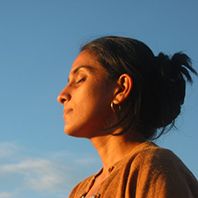 Anita is a yoga teacher and therapist in the tradition of Sri.T.Krishnamacarya and Sri T.K.V. Desikachar, a Reiki practitioner and a Life Coach. She is also the founder of Vishoka, a center for learning Indic and energy-based frameworks for living and healing. Her deep concern for human suffering and the problems of unsustainable living kept her on the path of seeking an integrated approach to looking at life, living, learning and healing.
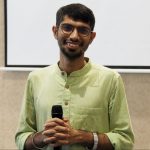 Ankit is a seeker in the wisdom traditions of India. The core of his work includes creating dialogic spaces where people can look within and see the connection between their inner and outer lives. Inspired by the likes of Gandhi, Aurobindo, Vivekananda and Guru Gobind his experiments in service took him back to his roots in Punjab where he is creating a community-led model of higher education which is open, inclusive and accessible for all. Ritambhara for him is a space for engaging in a community which is committed to a DHramic life. He anchors his work of learning and leadership in the Antaranga Yoga Sadhana and the humanistic wisdom of Mahabharata.