

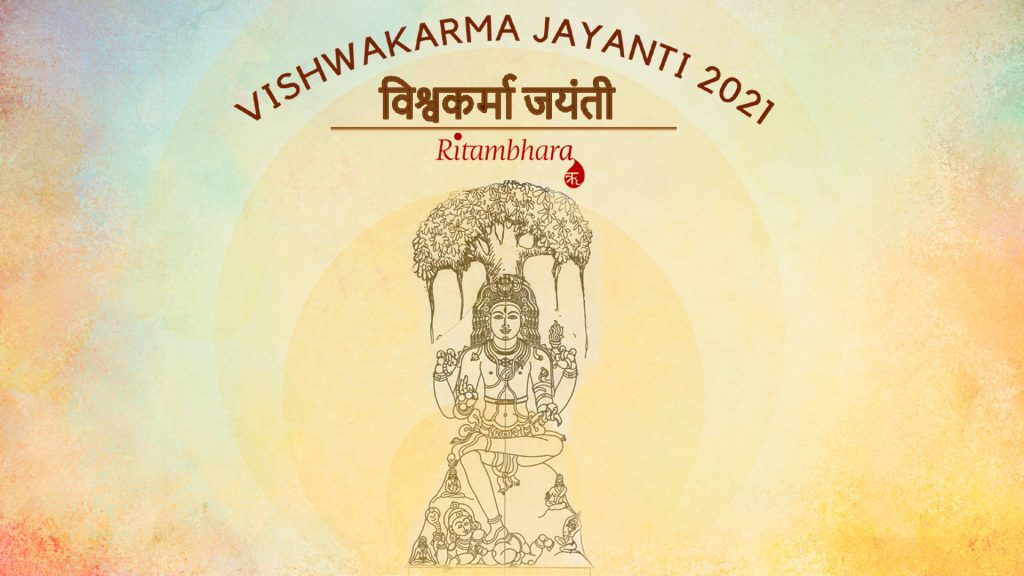
We had the great privilege in organising Vishwakarma Jayanti, our annual event, for the second time ,this year to celebrate and honour the works of our traditional sthapatis (architects), shilpis (sculptors) and artists from Tamil Nadu, Orissa and Kerala. This initiative, in collaboration with Dr. V Ganapathi Sthapathi foundation is our attempt to create a bridge between the tradition and the future.
This great art has not been celebrated sufficiently in the last few decades. Both the art and the practitioner have survived the ravages of time and continue to practice their marvelous craft with the same dedication and superb quality till today.
The program began with the welcome address by Sashikala Ananth, followed by Gayatri Shanmugavelan’s description of the Vishwakarma community.
The audience was in rapt attention as they were given a glimpse of the planning and execution of the Sanmarga Iraivan Temple in Hawai, by Ponni Selvanathan, thus emphasising the role and contribution of the Vishwakarmas.
The life and works of the Vishwakarmas were featured as short videos. The presentation began with the traditional and revered ones and proceeded to the diverse and new age torch bearers.
Sudarshan Sahoo, master craftsman from Puri who works with Stone, Wood and other media. A Padma Vibhushan awardee of 2021 for his contributions to the field of Art, he was initiated into the craft of stone carving at age 13 and is now completing seven decades of practice in the field.
Rashmiranjan Mahapatra, a young Pattachitra artist from Bhubhaneshwar. He hails from a traditional artist family who has been involved with Pattachitra art for over four generations.
- Varatharajan Sthapati, from Pudukkottai was initiated into the art of creating sudhai (lime) sculptures for temples. He has now been involved with art for 42 years. ‘The art came to my from my ancestral lineage. I learnt it through hands on experience from my gurus. I have trained 15-20 young artists. If future generations learn it, it will flourish even more.’
Sthapathi Thankappan Achary, from Varkala, now 92 years of age, hails from a family of traditional wood artisans and carpenters (thachan). He studied the vAstu shAstras and has been since applying this knowledge in temple and residential architecture in Southern Kerala. He has founded a learning centre called the School of Arts where he trains a new generation of Sthapatis. He remains active at 92 and continues to carry out his work today.
CV.Ravindranath from Kerala, hails from a family of traditional Vishwakarma jewellers who migrated to Tamil Nadu from Sri Lanka, 960 years ago, a to build a Vishnu Temple. He continues to practice the family trade and has established himself as a successful entrepreneur.
The evening began with a talk on the living traditions of Vishwakarma by Umapaty Achary, a Vishwakarma shilpi who is also a scholar on Iconography and Shilpashastra. Along with his brother, he revived the art of traditional sheet metal relief work. His work involves trining young students in the Gurukula system and in academic circles, publication on rare Shilpa texts and reasearch on comparitive studiesof Vedas and Shilpa shastras.
That was followed by the screening of “Vastu Marubu”: The living tradition- A Shilpi Speaks”. which encapsulated the essence of the day and led to an interactive session with the participants
The film is directed by Balakailasam, written and conceptualized by Sashikala Ananth featuring Dr.V.Ganapathi Stapathi, offers a layered insight into the art of making stones and metal sculptures from the perspective of shilpis.We are more familiar with narratives of Indian art from an outsiders perspective, often a western one, and rarely from the artists creating the art. This film reminds us to pause and listen closely to what the shilpis have to say and appreciate the depth of their creativity.
 Anoop is a student of Yoga, an entrepreneur, a coach and a father of two young boys. He has led successful leadership stints in both the corporate and non-for-profit sectors. On encountering the country’s water/farmer crises at close quarters, he decided to pause and examine the impact various ‘isms’ – capitalism, colonialism, etc., were having on us as individuals, families, the society and the environment at large. This quest led him to formally engage with traditional Indic knowledge systems while also learning from the latest advances in science – about our physical and mental wellbeing, importance of body and mind work in healing trauma and the urgent need for a conscious rebuilding of family / work / social structures if we have to thrive individually and collectively. Insights, frameworks and processes gleaned from these on-going studies, an anchorage in his own personal practice and his wide-ranging experiences is what Anoop brings to facilitation/coaching spaces in Ritambhara and his various professional engagements.
 Priya is a Yoga therapist in the Krishnamacharya tradition. She adapts Reiki & energy work, Vedic chanting, life coaching & Ayurvedic practices in her healing spaces. She is committed to nurturing collectives that have the praxis of Yoga at their heart.
 Anisha has been on an exploration to understand herself through yoga for the last 15years which led her to teaching yoga, yoga therapy and inner work through yoga.
 Apoorva chanced upon Yoga in her early 20s. A spark was lit within and there was no turning back. Her exploration led her to the Krishnamacharya tradition more than a decade ago. Curious about human behaviour and what drives it, she was thrilled when her search ended (and also began) when she first came upon the Yoga Sutra, which illuminated a path towards answering many questions that had been held for a long time.
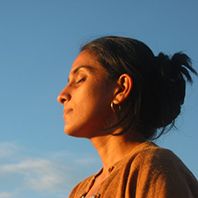 Anita is a yoga teacher and therapist in the tradition of Sri.T.Krishnamacarya and Sri T.K.V. Desikachar, a Reiki practitioner and a Life Coach. She is also the founder of Vishoka, a center for learning Indic and energy-based frameworks for living and healing. Her deep concern for human suffering and the problems of unsustainable living kept her on the path of seeking an integrated approach to looking at life, living, learning and healing.
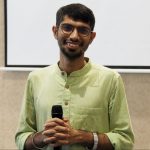 Ankit is a seeker in the wisdom traditions of India. The core of his work includes creating dialogic spaces where people can look within and see the connection between their inner and outer lives. Inspired by the likes of Gandhi, Aurobindo, Vivekananda and Guru Gobind his experiments in service took him back to his roots in Punjab where he is creating a community-led model of higher education which is open, inclusive and accessible for all. Ritambhara for him is a space for engaging in a community which is committed to a DHramic life. He anchors his work of learning and leadership in the Antaranga Yoga Sadhana and the humanistic wisdom of Mahabharata.