

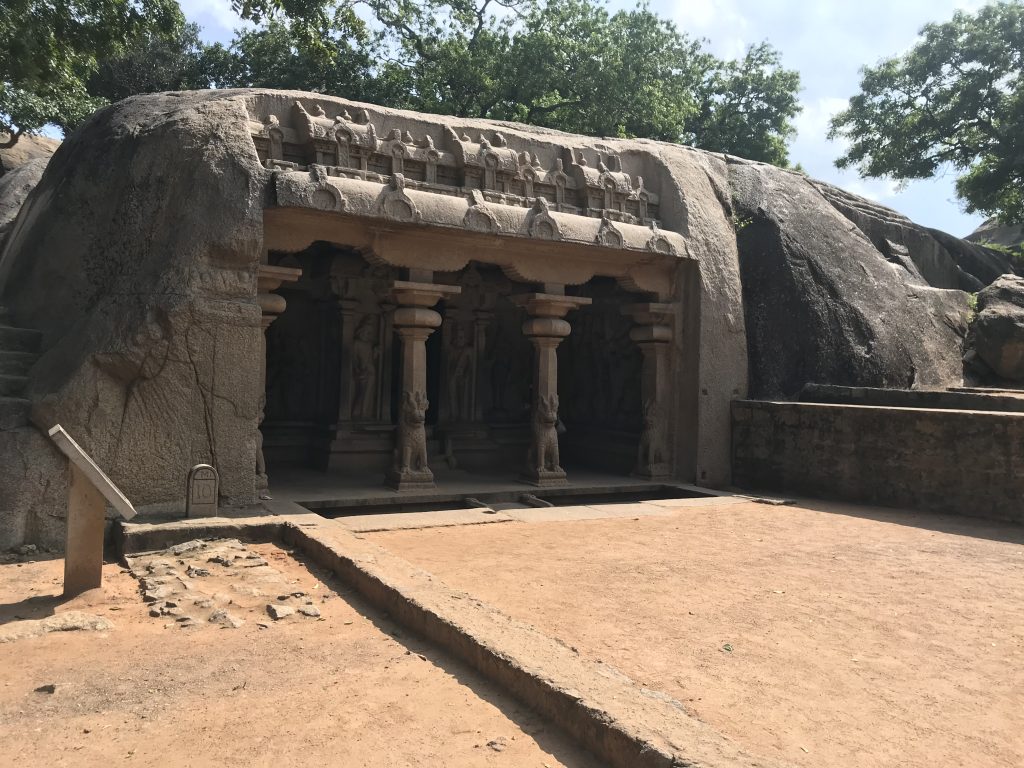
This article was put together from some readings, inspirations and sharing after being asked questions by different people “If I apply vAstu concepts as a modern educated Architect, if vAstu is real and if what professionals today in the field of vAstu say is actually true?”
At several levels vAstu is being considered as a hindrance to the design and creative capability of an Architect. This is because too much focus is being placed on texts by some professionals who are not necessarily designers, without adequate understanding of field application, construction techniques, local culture lifestyle and climate, and very impractical conclusions are being drawn by scholars. The projection of vAstu Vidya as a religious tradition, rather than an architectural methodology is a reason, amongst many others why there is a disconnect and lack of acceptance of this traditional knowledge into the Architectural education. It is hence important to understand the Indian knowledge of vAstu in a way that can be applied and can be understood better by the modern educated Architects themselves.
vAstu vidya is a process of creating space and form, it is about building a relationship of the human/ user and the space and it opens various directions for a designer to be more creative inwardly. This is the knowledge system, which has been contained in written texts known for their in-depth analysis of all aspects of building and sculpture. There were originally 32 texts out of which 16 are known texts written in Sanskrit and a host of local texts in different languages. Some of the texts offer more information on iconography and iconometry, some also offer information on simple rituals in community life. Narrative, oral transfer and application transfer are the most prominent sources of knowledge in Indian tradition.
The vAstu shilpa shAstra are texts that have been in existence for thousands of years. They have been written and re-written over the years. Usually these texts were safe-guarded by the Vishwakarma community. Traditionally, the entire design environment was looked after by the Vishwakarma community who were spread around the country and were recognised with variant names in different states and varied specialisations. The texts are in samskrutam (Sanskrit) as well as in regional languages, and a literal translation of these texts cannot be the exhaustive base for the application of the knowledge in the field.
The skill sets of modern knowledge of Architecture and study of the traditional texts, buildings and learning the craft technique can be a beautiful connection between the contemporary and the traditional practises of Architecture and a way to create the built environment. A well- designed building, a well-constructed song, a well-executed painting, are all very alike; each is capable of attracting and satisfying the observer or the listener.
Can one design and create a building which will reflect the richness and variety of human life and which will allow the beauty and vastness of the cosmic order to permeate its space and enrich its occupants?
In other words, vAstu is an approach of designing where designing is an offering rather than just a professional service.
Article Contributor: Shivangi Gadia
 Anoop is a student of Yoga, an entrepreneur, a coach and a father of two young boys. He has led successful leadership stints in both the corporate and non-for-profit sectors. On encountering the country’s water/farmer crises at close quarters, he decided to pause and examine the impact various ‘isms’ – capitalism, colonialism, etc., were having on us as individuals, families, the society and the environment at large. This quest led him to formally engage with traditional Indic knowledge systems while also learning from the latest advances in science – about our physical and mental wellbeing, importance of body and mind work in healing trauma and the urgent need for a conscious rebuilding of family / work / social structures if we have to thrive individually and collectively. Insights, frameworks and processes gleaned from these on-going studies, an anchorage in his own personal practice and his wide-ranging experiences is what Anoop brings to facilitation/coaching spaces in Ritambhara and his various professional engagements.
 Priya is a Yoga therapist in the Krishnamacharya tradition. She adapts Reiki & energy work, Vedic chanting, life coaching & Ayurvedic practices in her healing spaces. She is committed to nurturing collectives that have the praxis of Yoga at their heart.
 Anisha has been on an exploration to understand herself through yoga for the last 15years which led her to teaching yoga, yoga therapy and inner work through yoga.
 Apoorva chanced upon Yoga in her early 20s. A spark was lit within and there was no turning back. Her exploration led her to the Krishnamacharya tradition more than a decade ago. Curious about human behaviour and what drives it, she was thrilled when her search ended (and also began) when she first came upon the Yoga Sutra, which illuminated a path towards answering many questions that had been held for a long time.
 Anita is a yoga teacher and therapist in the tradition of Sri.T.Krishnamacarya and Sri T.K.V. Desikachar, a Reiki practitioner and a Life Coach. She is also the founder of Vishoka, a center for learning Indic and energy-based frameworks for living and healing. Her deep concern for human suffering and the problems of unsustainable living kept her on the path of seeking an integrated approach to looking at life, living, learning and healing.
 Ankit is a seeker in the wisdom traditions of India. The core of his work includes creating dialogic spaces where people can look within and see the connection between their inner and outer lives. Inspired by the likes of Gandhi, Aurobindo, Vivekananda and Guru Gobind his experiments in service took him back to his roots in Punjab where he is creating a community-led model of higher education which is open, inclusive and accessible for all. Ritambhara for him is a space for engaging in a community which is committed to a DHramic life. He anchors his work of learning and leadership in the Antaranga Yoga Sadhana and the humanistic wisdom of Mahabharata.