

How does one imagine the new, or is it a vision that comes to a mind that is neither projecting itself nor meekly following another? Is there an intent that we are born with? These were questions that came up often during the Mahabharata Immersion. So it came as no surprise to us when the last group came up with an innovative possibility. They were exploring arjuna, and started the process with a very new idea: kunti goes to karNa and tells him of his birth, begs his forgiveness and seeks his generosity, “Spare my children, your brothers.” she asks. In our exploration, karNA says “I will first have a conversation with arjuna and draupadi.”
What did it take for kunti to finally own up to her abandoned son? Did she think of him ever? What is her intention? Is it to stop the war or secure victory for the sons she has always owned up? None of these questions could be explored or answered. The actors who attempted to step over the threshold of the known were quickly pulled back to the unresolved and unbearable hurts of the past. karNa seeks a restoration not of his status but of self that has called out in despair for someone to affirm it and honour it. The child of soorya has remained in the shadows for all his life. No compensation can suffice. His pain is unbearable, now that he knows who he is. karNa is unable to let a new conversation begin. arjuna tries to envision a new possibility, but karNa is deaf to it, and soon recriminations and counter recriminations fly unhindered! “I have to let go all my cherished ideas about myself, my world view, as much as you have to step outside of your refuge.” arjuna begins. draupadi adds her bit, “I too must look at you without the hate I have held for you.” she adds. But the air is soon poisoned by the demands for the impossible, a turn back of the years, a drawing out of the pain of discrimination and denial.
The group was completely stunned, as were the actors. The deeply buried hurts and years of repressed yearning to be seen, affirmed, and appreciated, came bursting forth. The ‘old’ was insistent in its demand that its residues must be attended to, the unresolved must be acknowledged and the disowned must be embraced. One of the protagonists who works with the problem of trafficking and prostitution shared his context, how incredibly difficult it is to help the women, scarred by years of abuse, to let go of the old identity. Neither her family nor the community will really create a new space, nor can she look at herself without her own judgement (internalized from society no doubt). The trishanku swargam of the kota with its own unique culture of celebrations and compensations seemed a better world. karNa finally preferred the love of duryOdhana to the possibility of an ending of the war and the beginning of a new life as the eldest pAndava!
As India tries to come to grips with its greatest affliction, namely discrimination based on birth, can we look at this insight? The dalit, who has been wounded by stigma, has to be acknowledged and embraced as a human being with grace and dignity. Reservations and conversions to another religion do not wipe away her tears, they do not alter the psyche and make it whole. The ‘failure’ of the last group to find a new conversation was a huge eye opener for us.
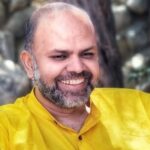 Anoop is a student of Yoga, an entrepreneur, a coach and a father of two young boys. He has led successful leadership stints in both the corporate and non-for-profit sectors. On encountering the country’s water/farmer crises at close quarters, he decided to pause and examine the impact various ‘isms’ – capitalism, colonialism, etc., were having on us as individuals, families, the society and the environment at large. This quest led him to formally engage with traditional Indic knowledge systems while also learning from the latest advances in science – about our physical and mental wellbeing, importance of body and mind work in healing trauma and the urgent need for a conscious rebuilding of family / work / social structures if we have to thrive individually and collectively. Insights, frameworks and processes gleaned from these on-going studies, an anchorage in his own personal practice and his wide-ranging experiences is what Anoop brings to facilitation/coaching spaces in Ritambhara and his various professional engagements.
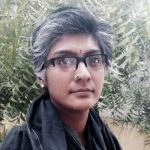 Priya is a Yoga therapist in the Krishnamacharya tradition. She adapts Reiki & energy work, Vedic chanting, life coaching & Ayurvedic practices in her healing spaces. She is committed to nurturing collectives that have the praxis of Yoga at their heart.
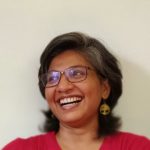 Anisha has been on an exploration to understand herself through yoga for the last 15years which led her to teaching yoga, yoga therapy and inner work through yoga.
 Apoorva chanced upon Yoga in her early 20s. A spark was lit within and there was no turning back. Her exploration led her to the Krishnamacharya tradition more than a decade ago. Curious about human behaviour and what drives it, she was thrilled when her search ended (and also began) when she first came upon the Yoga Sutra, which illuminated a path towards answering many questions that had been held for a long time.
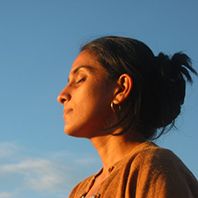 Anita is a yoga teacher and therapist in the tradition of Sri.T.Krishnamacarya and Sri T.K.V. Desikachar, a Reiki practitioner and a Life Coach. She is also the founder of Vishoka, a center for learning Indic and energy-based frameworks for living and healing. Her deep concern for human suffering and the problems of unsustainable living kept her on the path of seeking an integrated approach to looking at life, living, learning and healing.
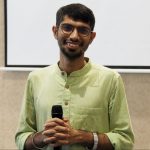 Ankit is a seeker in the wisdom traditions of India. The core of his work includes creating dialogic spaces where people can look within and see the connection between their inner and outer lives. Inspired by the likes of Gandhi, Aurobindo, Vivekananda and Guru Gobind his experiments in service took him back to his roots in Punjab where he is creating a community-led model of higher education which is open, inclusive and accessible for all. Ritambhara for him is a space for engaging in a community which is committed to a DHramic life. He anchors his work of learning and leadership in the Antaranga Yoga Sadhana and the humanistic wisdom of Mahabharata.