

We present ourselves to the world through masks. The persona that we call the ‘actor’ is the mask, and this mask is energized by the other personas, namely the victim, the guardian, the judge, the beckoner, the fiend, and the dreamer. The rasa anubhava is closely linked with what is energized/ triggered. The exploration of the mask was disturbing. We are often unaware of the fact that we are presenting a mask. It is when we start drawing what is really the face inside the mask that we start to realize the connection! In presenting ourselves the way we do, we also reinforce our constructed self, and therefore clog our senses. We cannot hear, see, smell, taste or touch the emerging new reality.
So we come to karNa! The group chose to examine karNa through the encounter he has with his father soorya and the subsequent encounter with indra, disguised as a poor brahmana. Being owned up by the father is a shock. It offers an opportunity to karNa to step out of the constructs which he has created for himself: one of a sootaputra, stigmatized and victimized for something beyond his control, another of being the epitome of generosity, the kodaivallal, and the third as duryOdhana’s friend, eternally grateful for the gift of angada desham. As the actors entered these characters and struggled within, all of us were deeply touched by the poignancy of the situation. karNa could not step out of the one self construct that was truly of his making, the generosity personified. He gives away his kavacha and kundala, he cannot say no to indra!
karNa is a favourite among us Indians. Late Prof. Pulin K Garg (IIM A) used to say that the central issue for understanding the Indian psyche is to understand the nature and dynamics of denial, discrimination, and deprivation. karNa is the arch archetype of all three converging in one person. karNa has always known that he was worthy deep down in the recesses of his heart, but he was reminded of his unworthiness as a stigma of birth. The compensation he received from duryOdhana, who made him the angada raja, was after all a proxy identity that only reinforced the denial, discrimination, and deprivation. The desperate struggle to come to terms with a fresh new possibility, of being affirmed at a very deep level, a secret that karNa held to himself, was too scary. karNa held on to the one construct he had built, his bulwark of affirmation that he was worthy, one that he had acquired through his greatness of spirit. All the group reflections centered around these aspects.
How deeply each of us seek affirmation of our being, and how profound and secret are the wounds that we retain when this is not forth coming? And yet we know in our hearts the gifts we are born with. Perhaps the courage needed to affirm ourselves as we know we are and assert our being from that foundation is several times more than the effort required to hang on to compensations and proxy affirmations, how ever painful this effort may be.
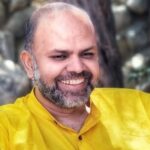 Anoop is a student of Yoga, an entrepreneur, a coach and a father of two young boys. He has led successful leadership stints in both the corporate and non-for-profit sectors. On encountering the country’s water/farmer crises at close quarters, he decided to pause and examine the impact various ‘isms’ – capitalism, colonialism, etc., were having on us as individuals, families, the society and the environment at large. This quest led him to formally engage with traditional Indic knowledge systems while also learning from the latest advances in science – about our physical and mental wellbeing, importance of body and mind work in healing trauma and the urgent need for a conscious rebuilding of family / work / social structures if we have to thrive individually and collectively. Insights, frameworks and processes gleaned from these on-going studies, an anchorage in his own personal practice and his wide-ranging experiences is what Anoop brings to facilitation/coaching spaces in Ritambhara and his various professional engagements.
 Priya is a Yoga therapist in the Krishnamacharya tradition. She adapts Reiki & energy work, Vedic chanting, life coaching & Ayurvedic practices in her healing spaces. She is committed to nurturing collectives that have the praxis of Yoga at their heart.
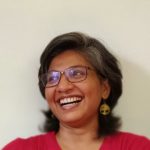 Anisha has been on an exploration to understand herself through yoga for the last 15years which led her to teaching yoga, yoga therapy and inner work through yoga.
 Apoorva chanced upon Yoga in her early 20s. A spark was lit within and there was no turning back. Her exploration led her to the Krishnamacharya tradition more than a decade ago. Curious about human behaviour and what drives it, she was thrilled when her search ended (and also began) when she first came upon the Yoga Sutra, which illuminated a path towards answering many questions that had been held for a long time.
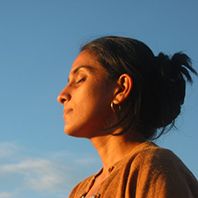 Anita is a yoga teacher and therapist in the tradition of Sri.T.Krishnamacarya and Sri T.K.V. Desikachar, a Reiki practitioner and a Life Coach. She is also the founder of Vishoka, a center for learning Indic and energy-based frameworks for living and healing. Her deep concern for human suffering and the problems of unsustainable living kept her on the path of seeking an integrated approach to looking at life, living, learning and healing.
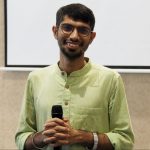 Ankit is a seeker in the wisdom traditions of India. The core of his work includes creating dialogic spaces where people can look within and see the connection between their inner and outer lives. Inspired by the likes of Gandhi, Aurobindo, Vivekananda and Guru Gobind his experiments in service took him back to his roots in Punjab where he is creating a community-led model of higher education which is open, inclusive and accessible for all. Ritambhara for him is a space for engaging in a community which is committed to a DHramic life. He anchors his work of learning and leadership in the Antaranga Yoga Sadhana and the humanistic wisdom of Mahabharata.