

Dharmāgraha: Dharmic Assertion and the Sacred Quest
Have you ever pondered what actions I, as an individual, can take amidst the polycrisis we find ourselves in?
Inviting you to Dharmāgraha, a response rooted in Dharma. Dharmāgraha asserts that we embrace the invaluable preservation of Dharmic principles. Those that enrich our lives and spread joy and positivity around us, including our beautiful planet. It elegantly explores the essence of Sacredness (yajvan aor bhāgavata), and contrasts it with Materialism and Organised Religion.
We ask, in today’s fractured times, can we traverse a path beautifully anchored in sacredness? Is it possible to move past right-wing fundamentalism or left-wing liberalism, and prioritise compassion, balance, and respect for all forms of life? By grounding the journey in these cherished principles, can we move past our current limitations and flourish into a powerful force for justice, healing, and unity.
This journey towards awakening from oppression is rooted in humanity’s earliest organised societies, with each new generation contributing unique stories and perspectives to this ever-evolving narrative. In that sense, this is not a retreat to the past, but an evolution forward, strongly anchored in our roots.
Dharmāgraha is a manthan, an experiential laboratory that awakens individuals from apathy and illuminates systemic inequalities highlighting the vital need for fostering social progress.
Together with the community, our five-day residential lab presents an opportunity for self-discovery and reflection as we tackle systemic inequities. Through rich, hands-on exploration, we strive to unveil the Dharmic Mind—an intelligence that nurtures harmony and flows with the rhythm of life rather than one that diminishes or oppresses. This enlightened perspective seeks to emancipate not only ourselves but also everyone around us. We believe that by confronting our impulse for revenge, self-preservation, or avoidance, we can access our wholeness and choose invigorating responses that illuminate our journey.
The guiding question that invites us on this journey is, “How can we reimagine ourselves to create a future that is wonderfully distinct from our colonised past and the colonising present?” This approach highlights the importance of seeking truth and genuinely connecting with others rather than co-opting or opposing them through dubious means. Ultimately, we aspire to cultivate an intelligence that embraces freedom from the dogma of organised religion and the limited viewpoints often presented by reductive rationalism.
Although our historical legacy is rich in profound knowledge, it is essential for each generation to envision and contribute to a brighter future. Our present times, especially considering the complexities we face, demand a greater effort than ever to embody a Dharmic Life rooted in compassion that facilitates genuine self-discovery.
The manthan invites participants to partake in personal growth through a framework originally devised by Raghu Ananthanarayanan. Together, we shall explore our sense of belonging and the impact of our shared history on our bodies and psyches.
Process of the Manthan
This process creates a warm and inviting space for us to comfortably share our dilemmas, contradictions, and the polarities that may sometimes cloud our emotions and thoughts. Through art, theater, dialogue we will explore the traumas our bodies deeply hold. Through this self-reflective exploration, we can render the invisible visible and give voice to what often remains unspoken, while embracing our whole selves. Our aspiration is to foster healing rooted in community and compassion, empowering everyone involved to discover meaningful and intentional ways of living.
For whom
This programme is open to individuals from all walks of life who want to live a truly Dharmic Life in today’s times of the polycrisis.
About Ritambhara
Ritambhara is a community of seekers, engaged in the quest of rasatmik living. The members share a common concern for the current ecological, socio-cultural and political state of the world, and find deep wisdom and hope in the teachings and praxis of Yoga as a way forward from these crises. The activities of Ritambhara include active co-learning through inner work, group study and practice of the various aspects of Ashtanga Yoga, exploratory dialogues on the different facets of the Indian tradition, and facilitating learning spaces and opportunities for others on a similar quest.
Date & Venue
Dates: September 9-13, 2025
Venue: Bangalore, India
Inaugural session: 10:00am September 9, 2025 (Tuesday)
Closing: 5:00pm September 13, 2025 (Saturday)
Please note – Please note that some evenings may include a session before or after dinner. To enrich your experience, please keep your calendar free from other commitments.
Fees
The program fees including food and twin-sharing accommodation is INR 30000. Scholarships are available for those in the social sector. So, please feel free to reach out to us to avail of them.
Registration
To register, please fill this form: bit.ly/RitambharaDOBD
Registration is complete only when payments are processed.
Payment link: https://pages.razorpay.com/dharmicmind
Last date for registration and payment of fees – July 20, 2024
Last date for withdrawal – July 20, 2024
In cancellations past the last withdrawal date, 50% of the fees will be withheld as cancellation charges.
Program Management Office
Program Director: Naveen Vasudevan (naveen.ritambhara@gmail.com); +91 9489527893)
Program Coordinator: Maragathavalli Inbamuthiah (maggie.inbam@gmail.com; +91 97408 25558)
If you would like to discuss the lab, please call any members between 10 am and 6 pm IST.
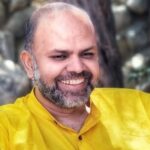 Anoop is a student of Yoga, an entrepreneur, a coach and a father of two young boys. He has led successful leadership stints in both the corporate and non-for-profit sectors. On encountering the country’s water/farmer crises at close quarters, he decided to pause and examine the impact various ‘isms’ – capitalism, colonialism, etc., were having on us as individuals, families, the society and the environment at large. This quest led him to formally engage with traditional Indic knowledge systems while also learning from the latest advances in science – about our physical and mental wellbeing, importance of body and mind work in healing trauma and the urgent need for a conscious rebuilding of family / work / social structures if we have to thrive individually and collectively. Insights, frameworks and processes gleaned from these on-going studies, an anchorage in his own personal practice and his wide-ranging experiences is what Anoop brings to facilitation/coaching spaces in Ritambhara and his various professional engagements.
 Priya is a Yoga therapist in the Krishnamacharya tradition. She adapts Reiki & energy work, Vedic chanting, life coaching & Ayurvedic practices in her healing spaces. She is committed to nurturing collectives that have the praxis of Yoga at their heart.
 Anisha has been on an exploration to understand herself through yoga for the last 15years which led her to teaching yoga, yoga therapy and inner work through yoga.
 Apoorva chanced upon Yoga in her early 20s. A spark was lit within and there was no turning back. Her exploration led her to the Krishnamacharya tradition more than a decade ago. Curious about human behaviour and what drives it, she was thrilled when her search ended (and also began) when she first came upon the Yoga Sutra, which illuminated a path towards answering many questions that had been held for a long time.
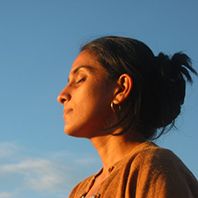 Anita is a yoga teacher and therapist in the tradition of Sri.T.Krishnamacarya and Sri T.K.V. Desikachar, a Reiki practitioner and a Life Coach. She is also the founder of Vishoka, a center for learning Indic and energy-based frameworks for living and healing. Her deep concern for human suffering and the problems of unsustainable living kept her on the path of seeking an integrated approach to looking at life, living, learning and healing.
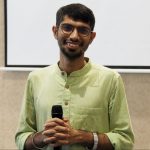 Ankit is a seeker in the wisdom traditions of India. The core of his work includes creating dialogic spaces where people can look within and see the connection between their inner and outer lives. Inspired by the likes of Gandhi, Aurobindo, Vivekananda and Guru Gobind his experiments in service took him back to his roots in Punjab where he is creating a community-led model of higher education which is open, inclusive and accessible for all. Ritambhara for him is a space for engaging in a community which is committed to a DHramic life. He anchors his work of learning and leadership in the Antaranga Yoga Sadhana and the humanistic wisdom of Mahabharata.